Wisconsin Resilience Outlook 2026
This resilience-focused outlook for Wisconsin focuses on change trends around factors that intersect with biological limits: extreme heat, water, and fire.
We should clarify that while Wisconsin is nice, it is not nice in the same way as Minnesota or Iowa is “nice”. Wisconsin is a place where almost anyone could get drunk and kick your a$$ at any time…it could be a buff guy, an old lady, or even a baby.
If you’re not prepared to:
drink about eighty-seven beers
wade through five-foot-high snow to get to where you can start digging out your car
tow your buddy out of some floodwaters
navigate the casserole hot dish divide
and still maintain your decorum
…You may need additional resilience training before considering Wisconsin as a destination. That being said, Wisconsin already has the built environment set up for sweltering heat, the kind of cold that freezes your nose hairs, big storms, and its water conservation community is hella wicked.
Wisconsin has the potential to continue to churn out cheese at 2C, and even 3C, conditions.

This photo of an ice cream advertisement, taken by the AR team while traveling through Wisconsin, exemplifies the straightforwardness you can expect.
Heat
2C projections for Wisconsin show very few additional days over 100 and some additional days over 95 (Wisconsin wants you to know that this is less than what Minnesota is projected to experience).
At 3C, Wisconsin is standing out in the region. While neighboring states are looking at additional days over 105, those severe danger days where the heat can kill, Wisconsin has the potential for a cool summer preservation. There are edges to hold for traditional dairy production as high end heat is very hard on dairy cows. Even with that potential, it is worth considering more heat tolerant dairy breeds developed in Africa and in Asia.
Water
The Midwest occupies critically important territory as this map of US Aquifers shows.
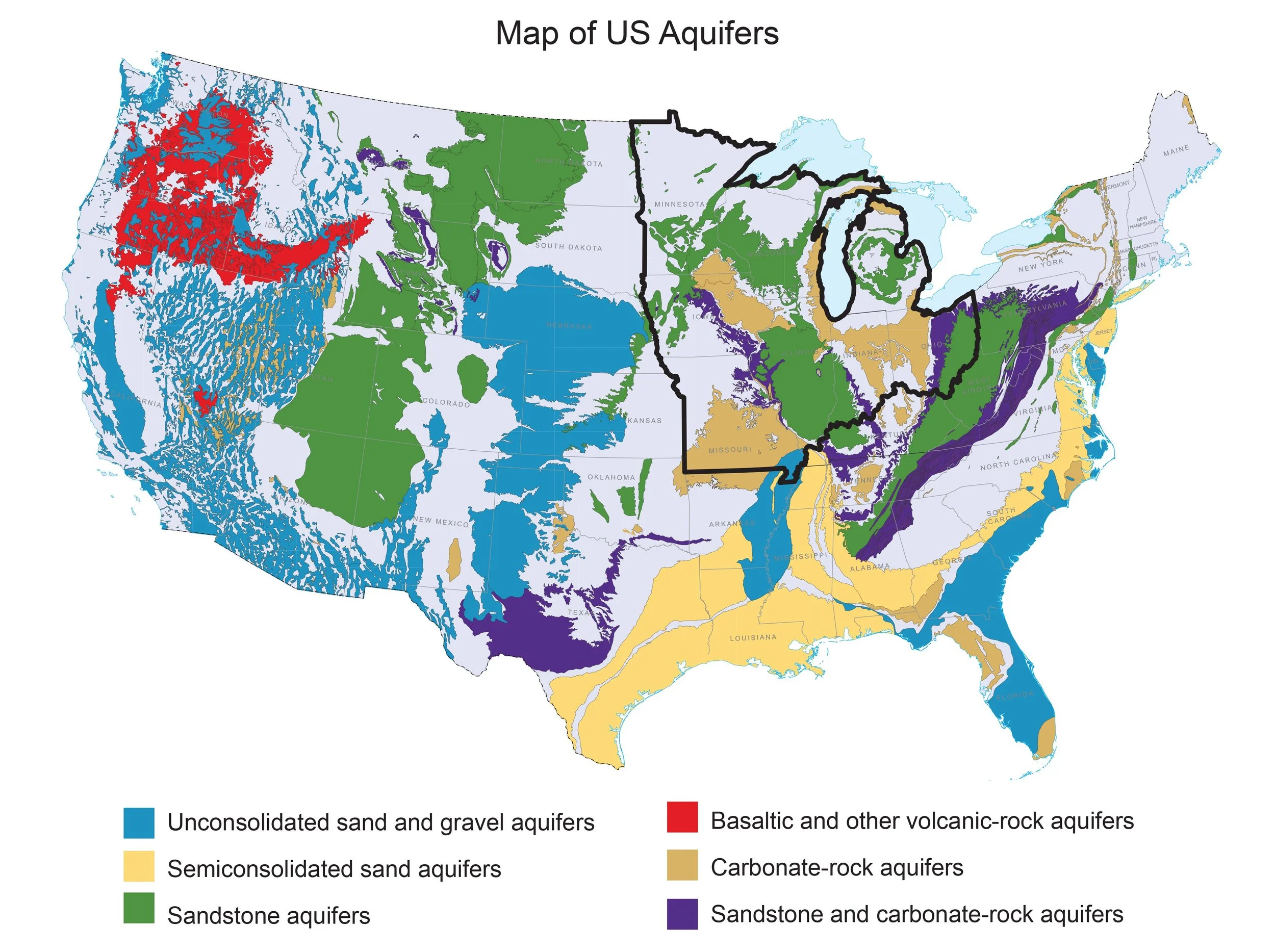
While the Great Lakes are often unpredictable, Wisconsin is conveniently far from the ocean and thus avoids some of the concerns coastal folks have about accelerated sea level rise likely to result from AMOC collapse. Wisconsinites will worry more about the potential for terrifying algal blooms that may contaminate our water supplies and produce foul gases if we do not care for the lakes appropriately.
The region’s strength is in its soil and water, and Wisconsin is certainly wealthy in water. That abundant supply of sweet H₂O may prove challenging, and at some times dangerous, as we will see in the storms section below.
NCA5 Figure 24.12
Storms, Precipitation, and Drought
Let’s check out the extreme storm projections from the NAC5. In Figure 2.12 we can see a dark line, repeating across subfigures, that goes right through Madison and Milwaukee.
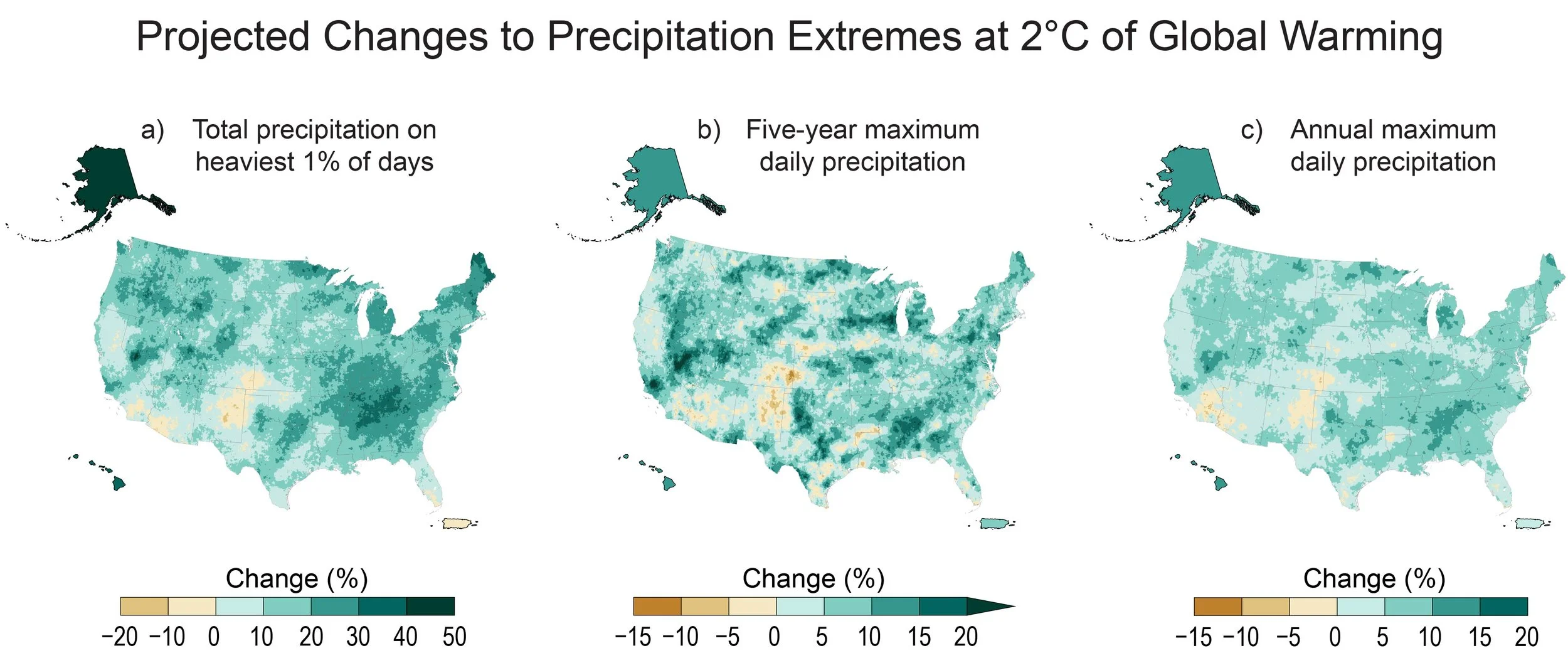
NCA5 Figure 2.12
Milwaukee’s leadership is aware not only of the threat of these extreme storms, but of their reality. They’ve dramatically increased their stormwater runoff capacity to help decrease apocalyptic style flooding in their city, and they’re working on more. At the 2025 Midwest Climate Resilience Conference, the mayor of Milwaukee, Cavalier Johnson, shared the bipartisan work he and his team have done on this issue, with the moving language “The Rain Falls on Us All”.
This is another thing we love about Wisconsin: When Wisconsin sees a threat, Wisconsin doesn’t give up. Wisconsin doesn’t quietly commission a study and put it in a drawer. They’ve got the potential for a real fight in them.
We are seeing those extreme storms form up right where projected. They are already impacting Milwaukee, and Milwaukee’s current response to change is helping mitigate damage. Here are some overall precipitation projections:
In NCA5 Figure 2.10, we see that Wisconsin is projected to receive additional precipitation overall, at 2C and 3C.
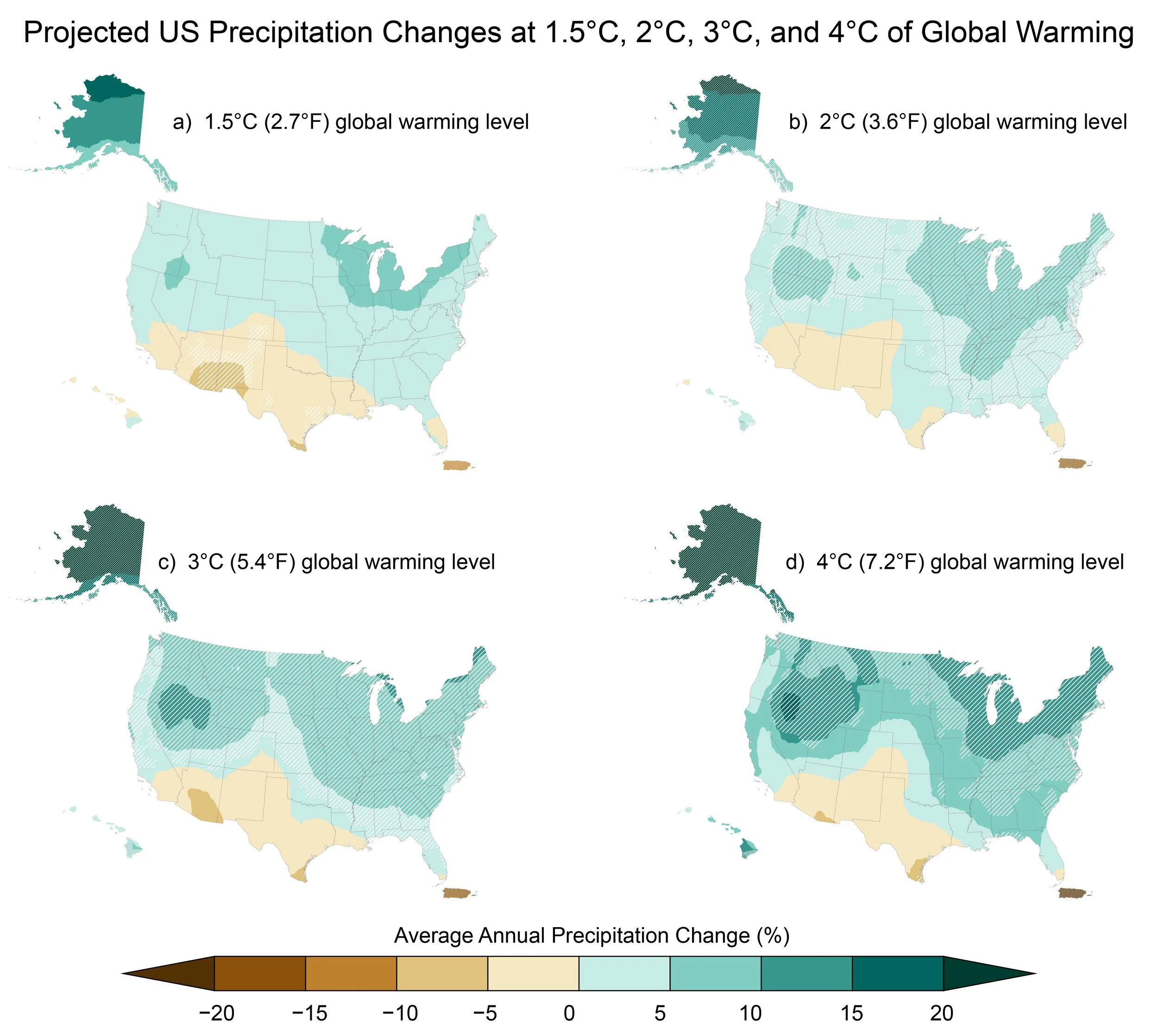
NCA5 Figure 2.10
Now, looking at the persistent and severe drought trend over much of the country, we can see a curve (where things aren’t so bad) on the drought monitor map coincides nicely with that on the NCA5 projected precipitation changes. We hope that the increased precipitation may balance out with the drought trend.
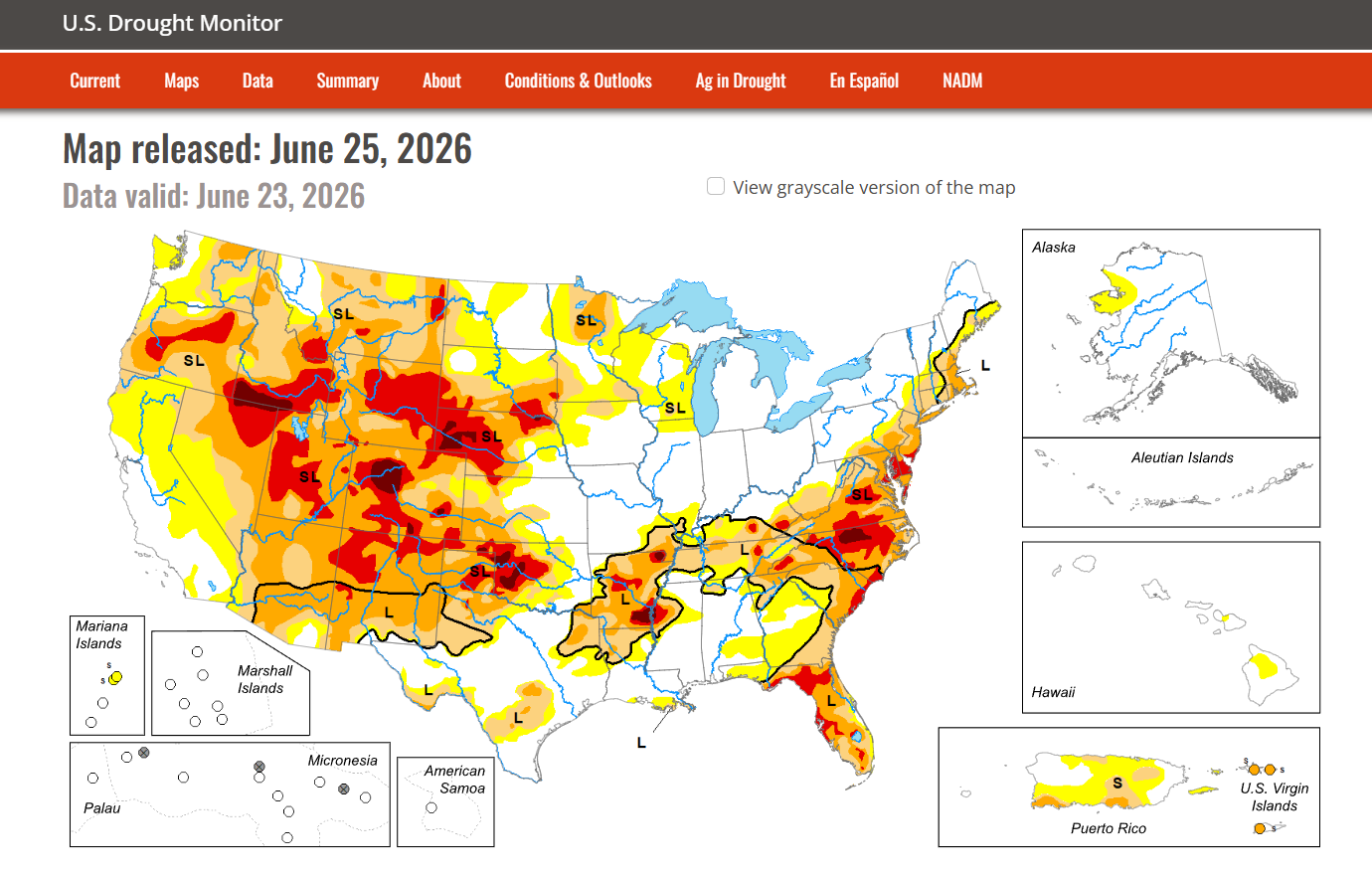
(The US Drought Monitor is a great tool, but keep in mind it may be out of date when you view it.)
Where we’re seeing resilience against drought, we’re seeing those change trends pushing against each other. The overall drought trend you see projected for AMOC collapse in much of North America is going to interact with the warming pattern of substantially more rain, particularly in the northern region.
The state of water systems throughout the West right now is very serious, after that warm, very dry winter they experienced in 25-26. The overall warming trend is not going away immediately because we’re entering AMOC collapse; it’s going to continue. In a warmer world, there’s more moisture in the atmosphere, and if and when it comes down, it is better to have water than not. In areas where there is a push-pull between water trends in the projections, we’d rather be looking at water than a doubled drought trend, a drought multiplier.
Seasonal Changes & Agriculture
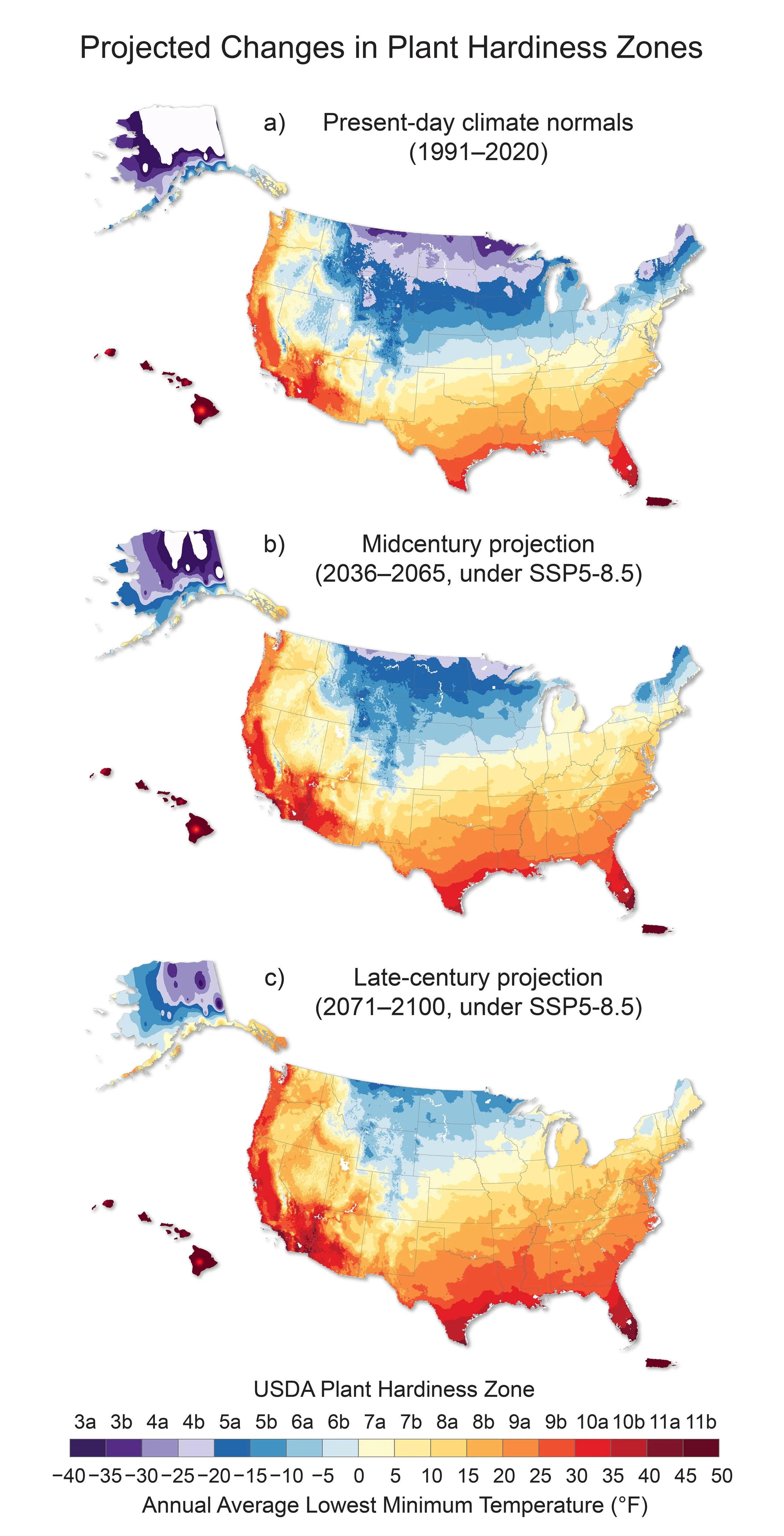
Winter is a traditional strength of Wisconsin. It forms the land, forms the people, forms the culture. Winter weather in Wisconsin is the kind of weather that could kill a person who was unprepared, dumb, or so drunk they fell asleep in a snowbank. People from out of state, who are used to pretty winter scenes on Christmas cards, sometimes don’t realize that these are potentially fatal conditions; you can actually freeze to death. It is important to be prepared for Wisconsin winters.
In the 2C projections, Wisconsin didn’t look too bad on winter retreat, keeping lows below zero (see Figure 11.3 from the NCA5).
In an AMOC collapse scenario, Wisconsin could see winter lows closer to the pre-industrial climate. We can expect much more regular polar vortexes (as Wisconsin experienced in 2025-26), bigger temperature swings, and danger of late frost.
Last frost dates may not move back consistently and that danger of a late frost may well reduce the shoulder season advantage in the spring. There is a real need to plant diverse varietals of fruit trees, so that if late frosts hit (especially hard frosts after warm periods as Wisconsin had in March ’26), you can spread out your sensitive flowering time and increase your risk spread to decrease total risk of fruit loss.
In the last five years, the agricultural shoulder season advantage has taken the form of longer, warmer falls with later first frost dates, and we are likely to see that trend continue.
Spring has been challenging, with warm periods (sometimes over 80 degrees) causing early bolting of many traditional spring varietals.
More varietals are a necessary solution to the problem of unpredictable late frosts. That is a big part of why our ancestors planted 20 kinds of apple trees on a place, not one kind of apple tree. In this next chapter, we should be learning from the strength of our past.
Fire
There’s an increased risk of wildfire for northern Wisconsin in the future. Where we see winter change, we see stress on trees. And even though you may not experience the drought conditions that have been killing huge amounts of trees in the west, those forests in the west that have died and are dying, that have burned and will burn, they didn’t get killed by drought alone. Pests like pine beetles have also contributed. We should not assume that those other factors, those biological factors, will not come to the Midwest.
This fire map shows large watershed areas. When we look at the various change factors that contribute to wildfire conditions, the risk looks highest through Ironwood and north of Ironwood. Fire awareness and fire resilience, including land management, are important to cultivate in Wisconsin. New threats- emerging threats- those can be the most challenging and dangerous because people don’t know how to respond. When we look at coniferous forests today, we need to think about fire in a different way because of the strain we’re seeing across the national landscape, and the knowledge that some of it is disease driven.
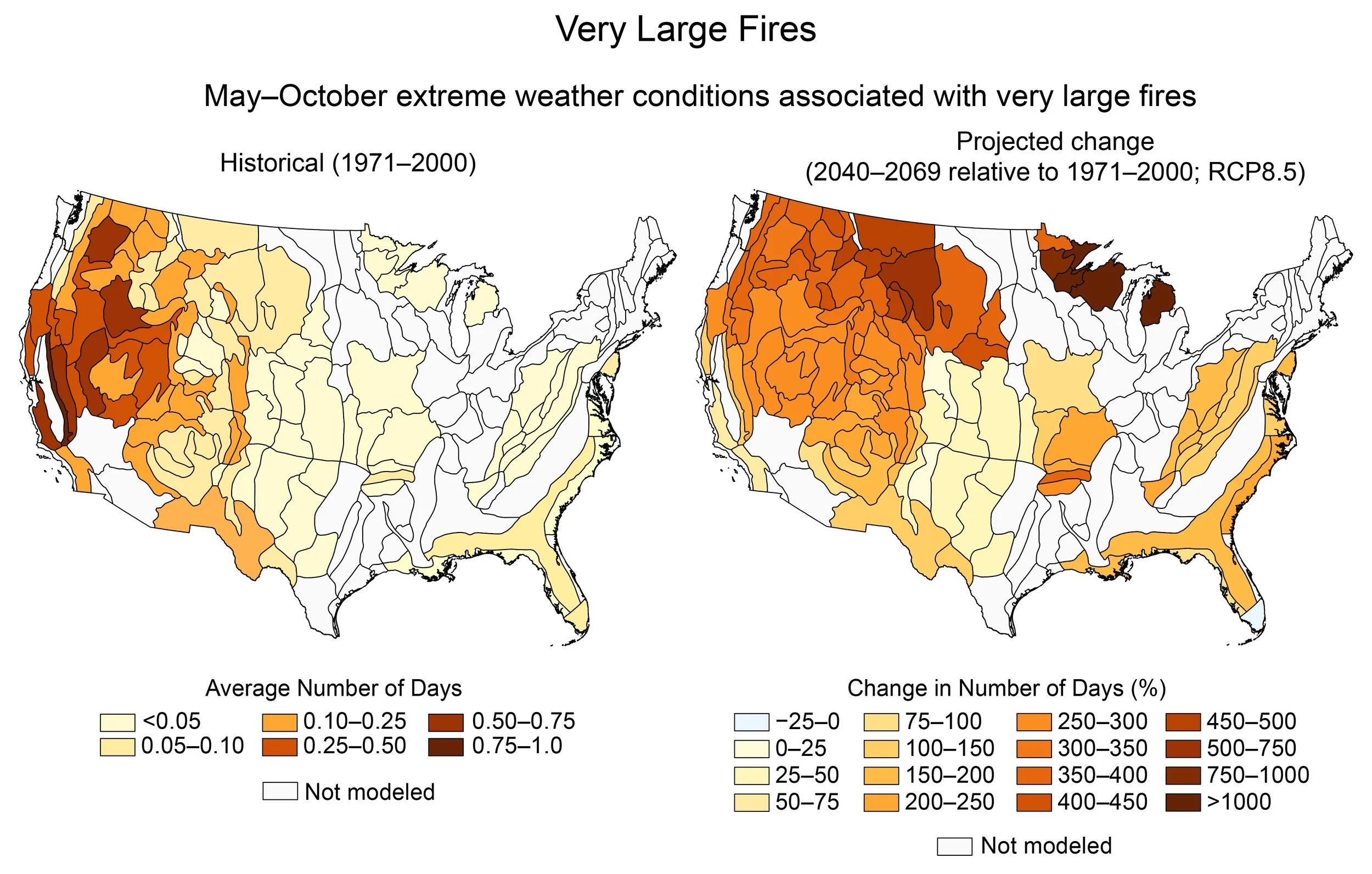
NCA5 Figure 7.4
Wisconsin, You Rock.

Wisconsin is a beautiful state that is particularly culturally resilient and resistant against outside influences. Not as culturally isolationist as Michigan, but they get some of those vibes through touching the UP.
Some more cultural notes:
In Wisconsin, they have a drink called a “Wisconsin Old Fashioned”. It’s like an Old Fashioned, but you use brandy instead of bourbon, and then you put Seven Up in it. People there are regularly drinking brandy and Seven Up at lunch… like all the time. Makes them unpredictable. They make unusual choices.
Like Green Bay, home of the Packers. You know how the Packers use their home snow advantage & beautiful outdoor stadium to just obliterate teams from out of state? Those are some amazing games, the ones where it starts snowing real heavy during the game. That’s entertainment.
Green Bay cultivates that foundational team spirit by basically not plowing in the winter. Extremely limited city plowing in Green Bay! Everyone’s fighting through the snow up there, somehow, from early childhood. While heavy cheese consumption is part of their early training, it’s not the whole story. And if you like Wisconsin, you’d better get on board. Wisconsin is staying tough.
With the changes we’re seeing in the world’s oceans, signals indicate you should keep your winter gear handy, Wisconsin. Your real winter gear. Summers will be trending hotter, we’re looking at more extreme events of all kinds, real edge forecast.
In the larger Northern Midwest region, we often deal with extremes of all kinds, so in some ways, we continue in our character. Protect your water. Keep protecting your water. Don’t tolerate too much of anyone’s bullshit, and stay aggressive- but I know I don’t need to remind you of that.
When we look at resilience potential, you all are like the badger, indeed. Tough, attentive mothers, known for aggressive behavior! Think about ways to keep the water out of your dens; you all have a good shot.
Badger State, your future’s worth defending. Give it all that you’ve got!